Sunday, July 30, 2023

Living in Community


"Living in Community" or "doing life together" are buzzwords in the Body of Christ these days. And in theory, it sounds good and even Biblical, but our Western understanding of living in community is not quite the same as communal living in Africa. Fuzzy always jokes with me; if I have something he wants, he says, "You're my wife, what's yours is mine, and what's mine is mine!" As funny as that little saying is, it would be pretty accurate to say that Somalis would function in the same line of thought. Our local friends often share a compound with one or two other families; in those situations, everyday life tasks become communal events sharing possessions and responsibilities. Rarely do Somali women go anywhere alone. You always go with a neighbor or friend, even if they only walk with you halfway. Sharing what you have is so second nature here. Often shoes are kicked off outside the door before entering the house; when someone leaves the room to get more tea, check on the children, or answer the gate, the first pair of shoes on their feet are the ones they wear. I have been left searching for my shoes many times! My friend once had to leave a party with one of her shoes and another the same style but two sizes too small. She wasn't too worried when I asked what she would do; she just laughed and said I'll switch them back when Marium has her baby!

When I lived in Mali, the walls around the compounds were only waist-high at most, creating a barrier, not protection, but because of that, everyone passing by could see what you were up to. If someone was washing laundry, often a neighbor would grab her basins and join in, or the woman would gather next to the well on washing day. If your neighbor was pounding millet or corn, the tuk, tuk, tuk of mortar and pestle would be an open invitation to come and take a turn or to bring your own bowl of corn, securing the next spot in line and extra hands for the pounding. Living in community brings to life the saying, "Many hands make work light." This is also true when there is a celebration, baby naming ceremony, wedding, graduation, or funeral. Everyone pitches in and brings what they have. I remember going to greet my friend the day after a party at her house, and all the women were still there! I was surprised to see everyone there again, thinking I misunderstood the ending of the gathering until my friend explained that everyone had come back this morning to claim their things borrowed, trays, bowls, dishes, and spoons. Often the items are marked with nail polish, and those that aren't are usually claimed without too much fighting. Living in community is so much a part of life and culture here; we once heard a story of a local who was invited to a conference. En route to the meeting, his flights were delayed, and he ended up being put up in a hotel for the night. Thinking that enjoying a fancy hotel for the night and a big buffet all free of charge would have been an unexpected luxury for him, his friend asked him how it was, and he was appalled that the hotel put him up in a room all by himself! He has never once in his life slept in a room alone. He was so uncomfortable he slept with the door propped open!

We are learning that so many things here are set up to function with a society that values doing life in community! Recently, as we were packing up to leave JTown, Fuzzy was stung by a scorpion. At first, we were not too concerned, but as the day went on and the symptoms worsened, we found ourselves at the local hospital. We had never been to the hospital in JTown before, so we were unsure of the process. The hospital's compound is huge, growing, and under construction. There were no signs anywhere except one that said Pediatric Emergency. We headed there, hoping someone would point us in the right direction. I went in armed with a photo on my phone of the scorpion, using my best Somali, asking where we should go to see a doctor. Someone in scrubs pointed us down the hall and through the door to another courtyard. A crowd was around a door, where the guard was fending them off with his cane. We could clearly see that he wasn't letting anyone in, but when he saw the scorpion, he ushered us in. We still didn't know what to do or who to talk to, so I grabbed the next person I saw wearing scrubs and showed him the scorpion. He also ushered us along to a place where Fuzzy could sit on the edge of a small wooden bench and wait for a doctor. We then realized that we had entered the ER from the back door but were now in the right place, surrounded by many others whose illnesses and injuries seemed much worse than Fuzzy's. After a few rounds of questioning, we were given a prescription and told to go to the pharmacy inside the hospital. We walked around and trusted that others pointed us in the right direction. We got to the pharmacy, paid about 25 cents for a few syringes, and were told to go to another desk, where we were sent to pay for the lab work. After that, we were pointed to the lab, where we picked up empty vials to take back to the ER. Once back in the ER, the doctor took the syringes and drew Fuzzy's blood. We were then told to return the blood to the lab and wait. We had a few hours to kill until the lab work results were finished, so we went to find some dinner.

While we were at dinner, it dawned on me that every person that came to the ER was always accompanied by at least two other people, if not more. Each ill person had someone to sit with them and someone to run to the pharmacy and pay the bills. No one entered on their own. Even the hospital was set up for doing life in community! This also explained why the guard was so aggressively turning people away from the door, as the ER was full!

When we returned, we picked up the lab results and took them back to the ER doctor. He determined that the poison was leaving Fuzzy's system, so anti-venom was not needed at this point, but he prescribed him a double dose of allergy medication that we had to pick up at the pharmacy on the way out. Fuzzy felt some residual effects of the scorpion sting for a few more days but has since recovered well!

Thursday, January 26, 2023

My Friend Joy

 Having lived in a few other countries in Africa, I have found it much easier to connect with the community around me if I am first introduced to others by a friend.  When I lived in Mali, there was a shop owner who was so kind to me and wanted me to learn the language and culture quickly. His shop was the place to hang out in my small village, so it wasn’t odd for me to be there also. He had me “work” in his shop selling goods so that I could learn the names of all the items and the real price, and learn the money system and how to make change. It was such a blessing to me! One day after spending time at his shop, he said I should go cook with his wife, one of the small children took my hand and led me behind to the small round cooking hut in the center of the compound. I entered and greeted his wife and sat on a tiny stool and watched as she peeled onions and garlic and pounded them to paste and cut up tomatoes in her hand.  I learn how to make every kind of sauce and how to vigorously whip the toh to rid the batter of clumps. I didn’t only learn about food in that small smokey hut but also about Tenna, her family, and her marriage. I learn how to do life in a village with her by my side.

When I lived in Chad, the family I lived with had a house helper who would cook, clean, and go to the market for them. Some days I would tag along, and she would introduce me to the sellers she frequented. Once I started learning Arabic, my language helper invited me to visit our neighbors and even took me to baby-naming parties when I had very few words to communicate. These interactions made life so much easier. I knew that the sellers at the market would give me a fair price because Aisha introduced me to them. I would see women in the street or at the shops, and they would recognize me as Nina’s friend who was at the party and invite me for tea. Once I went to a wedding in the countryside with my neighbor and spent a few nights out in the desert. A few months later, I was visiting a village hours and miles away in the opposite direction, and a lady selling at the market recognized me from the wedding and closed her shop at the market to host me at her house for tea and a meal.

When I move to a new place, even a new neighborhood, I always pray for a close local friend. While we were in the states, at every church we spoke, I asked for others to join me in praying for a local friend in Jtown.

When we first arrived here, just walking around our neighborhood caused a lot of commotion. People would yell racial slurs (not accurately identifying our race) and stop and stare at us. When I first when into a large dukan, or shop, to buy sugar, the seller handed me money, saying the Arabic blessing one says to a beggar, thinking I was a Syrian refugee. I handed the money back and asked to buy sugar. The more we walked up and down the road exploring and seeing what is available in our neighborhood, the more people started getting used to seeing us. One evening we were walking passed a shop, and I hear a lady’s voice call out in English, “ hello, seeester! Are you fine?” I turned and greeted her and took note of which shop this was.

The next day I went out, and she was in her shop, so I stopped to see what kinds of things she sold. She was eager to help me find what I needed, so when I asked for matches, she sent her daughter across the road to find them at another shop. She told me her name, which in the local language means Happy or Joy. I told her I would come back and visit another day. Later in the week, my language helper changed the time of our normal lesson, so I found myself with a whole afternoon free and leftovers prepared for supper, so I went out to visit with Joy.

Joy’s shop is made up of a tin shack divided into three sections. The far left section is rented by a young man who is a barber. He has a minuscule shop, one cracked and crocked mirror, a single barber’s chair, and a rustic shelf to hold his few tools. The middle section is half seating area and half kitchen for Joy’s small roadside restaurant. She has 6 plastic chairs along the left side and her cooking area in the front right corner. She usually has three small charcoal stoves going at once, one cooking a large pot of rice and two cooking sauces. Behind her are a few jerrycans of water and basins laden with all the dishes, cups, glasses, and items needed to sell juice, tea, coffee, and serve food throughout the day. The doorway of this center section is blocked off with a beaded curtain so that women can come inside and eat or drink, hidden away, and separate from the men. Just on the outside of the beads are more plastic chairs and tables for the men to sit on. The outside area is also divided into three sections with walls made of orange tarps. The far right side of the shop is where the goods are sold. There is always a variety of things being sold, which often changes as things sell out and are replaced with something different. She usually sells a mix of drinks, packaged cookies, and snacks. They also make juice, so there is always a variety of fruits and avocados available to buy. Occasionally I have found small heads of cabbage, a handful of tomatoes and onions available, and once even eggs.

I went out that afternoon, and Joy was on the shop side selling goods; she pulled a chair inside so I could sit with her and chat. I learned that she is married and has 7 children and one on the way. She was married when she was 15 years old and never finished school. Her husband paid for her to attend a small local school in her neighborhood in the evening to learn English, but that was many years ago, and she has forgotten a lot, so she was happy to practice with me. I told her I am learning Somali so we can help each other out!

I have gotten into the habit of stopping to visit Joy anytime I pass her shop, sometimes she isn’t there, and her daughter is selling things, or her husband. I always stop and greet them and ask about Joy. I am slowly getting to know her family, and her youngest son loves when I visit and often runs to me when he sees me coming. In the mornings, when I visit, Joy is usually preparing the food to sell for the day, but always invites me in to sit and pours me some coffee. I am so thankful to have met Joy and see her as an answer to many prayers prayed for me to have a local friend. I cannot wait to see how this friendship will grow in time. 


Wednesday, December 28, 2022

Anthem

We have been living in our new town for a few months now.  This season has already had a lot of ups and downs for us as we adjust to life, language learning, and culture.  When we moved in, I felt the Father urging me to worship.  I don’t listen to music very often; I usually have my earbuds in listening to language recordings, podcasts, or audiobooks as I clean, cook, or wash laundry by hand.  Still, there was something about this season that I felt just needed to be more focused on worship.  I love how He sets things in our hearts like that!  I purchased and downloaded some new music and let it fill my kitchen as I cooked and echo off the walls of our mostly empty house as I swept and mopped.  Being intentional about playing music started to fill places in my spirit that I didn’t know needed filling!  Before I knew it, I writing down lyrics, hanging them on the kitchen walls, and making lock screens on my devices, pointing my heart back to worship anytime I see it.

One day as I was washing clothes, the lyrics of one song stood out to me.  Later I was spending some time in the prayer room before our Father, and the words I had sung flooded back.  I felt the Father say that this is our anthem for this season.  The words are not the main verse, or chorus, almost just a refrain that isn’t the central part of the song but spoke so loudly to me!  The song is “Canyons” by Ellie Holcomb.  It is a good song!  I’ve heard her talk on podcasts about how much this album means to her and how many songs came from experiencing God while camping at the Grand Canyon.  About halfway through the song, there is a refrain that goes like this:

               I walked into the desert, and I found You

               You set a table for me in the presence of my enemies

               To share with my enemies

               No longer my enemies

               No longer my enemies

Every time I hear this song, this part strikes me!  Let’s face it!  Somalis have a pretty well-known reputation, and not for their kind, gentle, and generous personalities!  

E V E R Y W H E R E we go and share about where we live and what we are doing; people always comment on how tough Somalis are or share some harrowing story of their experience with a Somali.  If you google anything about Somalis, the first few articles that pop up are stories of being kidnapped by Somali pirates!  The most known Somali proverb goes like this: “Somalia against the world.  My clan against Somalia.  My family against my clan.  I and my brother against my family.  I against my brother.” They are their own enemies!  We hear stories about T3rrorest cells and “Al Sh@b@b” overtaking towns and cities, and we know they have a presence here in our city.  Considering all the above statements, it would be easy to think of Somalis as our enemy.

We’ve been sent here for a purpose.  We are walking on faith and obedience.  We know that our Father has a plan for Somalis, and we want to be available to do whatever He asks of us so we can glorify Him!  I love thinking of sharing the table set before us with our enemies; even more so, I love thinking of our enemies no longer being called enemies but Brothers and Sisters!

Where has the Father set your table?  Who are the enemies in your life that your can share it with?


Monday, October 24, 2022

Secure in Him Alone


Security is not in walls, gates, and things of this world but in Him alone. In the Horn of Africa, most houses have some form of wall or fence around them. These “walls” are sometimes made of bricks and cement, sheets of tin, and sometimes even branches or strategically planted thorn bushes. If the walls are made of bricks and cement, they are often topped with shards of glass along the top and rings of razor wire or “danger wire” to deter thieves from climbing over the top of the walls. The walls provide privacy from the outside world and a sense of protection.

In this region, it is often suggested that foreigners also have a guard at their compound. I have friends with a guard who lives in an outside room of their compound and has become like one of the family. Others have a guard that comes during the day, monitors who comes and goes from the compound, and ensures nothing is stolen. The guard often is the one to sweep the compound, water plants, and maintain the water tank or barrels. Some friends here have a guard that works only overnight, sleeping in the compound and warding off intruders.

When we first moved to the region in 2020, we opted not to have a guard, mainly because our compound didn’t have an outside space for a guard, and we felt secure enough. Our first house was close to the main road, shared a wall with a bar, and the previous renters ran a “massage parlor” out of the house. The wall around our compound was only waist-high with decorative iron fencing above. This wall didn’t provide much in the terms of privacy or security, we quickly found out. Within the first week of being in our house, robbers easily bent the iron fencing and squeezed through the small opening. They flipped the main break to our house (an easy task as all electrical breakers are on the outside of the houses here) and then popped the lock to our front door. Since they had flipped the breaker to our house, our outside lighting shut off, but it also caused our electric converter to beep, which woke me up. I heard them pop the lock to our door, but being in a new house, I wasn’t sure if that was a common night sound to hear here so close to that bar and main road or if it should be of concern. The thieves then turned on their flashlights inside our house, alerting us to their presence.

Fuzzy locked me in our bedroom and ran down the stairs, ready to attack. The thieves were quick to turn and run out of the compound, managing to grab a few small things on the way out the door and my laundry basins. We were shaken for sure! Fuzzy flipped the breaker back, and we were able to assess the damage. The thieves bypassed our “living room,” skipping over our electronics and my purse. They opened the first door where we were storing our empty luggage and had managed to roll one suitcase down the hall before Fuzzy scared them off. Ironically the suitcase they had chosen had completely fallen apart in transit between plains, trains, and automobiles, and I secretly wished they would have taken it just because it was broken and the jokes on them! HA! They did manage to swipe a set of keys with the Best Aunt Ever keychain and Fuzzy’s prescription sunglasses.

Once the sun came up, we called our landlord and our local friends to help us replace the locks and repair the fence and door. Both our landlord and our friends suggested that we get a night guard, and they knew of someone who needed a place to stay. We agreed just to give us a little piece of mind at night. We hired a young guy who had come from the countryside to the city for work but did not have a place to stay. We let him store a few belongings in a small room, and he slept outside on our porch, weather permitting. If it was raining, he slept just inside our door. He would arrive every evening just before dark or soon after. He would walk our compound and check things out throughout the night and sweep the compound in the morning before heading to work. He was an easy guard, and having a local being seen coming and going from our house let the community know that we had someone and were connected, almost like community accountability. We never had anyone try to break in again after that.

This term, having just moved to a new city, we started renting a house a few weeks before we were able to move in. Our landlord had a guard staying at the empty house already, so we paid him for two months, allowing him to protect our house until we moved in and allowing us to get to know him and decide if we wanted to keep him on long term. When we arrived, the guard was pleasant enough, but we quickly learned that he was not Somali and didn’t speak either of the languages we have started to learn. He was used to having free reign over the empty house and was not willing to give up the keys to us. He also had other guys over to our house, and they spent the day chewing Chat (a common local narcotic of choice) and even spent the night. We talked with the landlord and explained the situation. Once we were given all the keys, the landlord said we were free to let him go and to find another guard.

So we are on the search! We had one guy come and chat with us about what we expected of a guard, and he seemed promising but didn’t show up when it came time. Our neighborhood seems to be pretty safe, so we are not fearful but want to do what is culturally acceptable.

We know that the walls, razor wire, and locks on doors can only protect us so much. Fuzzy has a large kitchen knife that he carries around if there are any suspicious sounds, thankfully he hasn’t had to use it, and the only damage it has caused is poking a hole in his ma’owis (traditional Somali man skirt). We counted the cost of “safety and security” when we signed up for this job and chose to live among such aggressive people known for piracy and terrorist cells. In all reality, if we do our job well here, our lives will likely be threatened. We have peace knowing that we are secure in the everlasting arms of our Father.


Tuesday, August 23, 2022

Leaning into God in Hardship and Suffering


 Recently Fuzzy and I have been invited to teach at multiple gatherings, one about Trauma and Healing and one about Leaning into God in Hardship and Suffering.  We love any opportunity to encourage the Body of Christ and prayerfully agreed to teach at both events. Over the past year, we have been exploring different online classes, teachings, and seminars to learn more about Psychology, Mental Health, Trauma, and Member Care for Field Workers. We know that this job we do can be very stressful and lonely. We both have had different experiences with how we have handled stress and trauma on the field in the past, both in healthy and not-so-healthy ways, and we both have benefited from having gone through a debrief of these events. We would love to make ourselves available to debrief other workers. Not only that, we know that living in the Horn of Africa, we will be building relationships with locals who come from war-torn areas and have suffered greatly at the hands of their families or their government. While shocking to some of us from the west, their trauma is a common occurrence here and part of daily life, but still can have lasting effects on their mental, emotional, and spiritual health.

I know that I have suffered very little for the Gospel at this point in my life. I have made sacrifices, yes, but that is not the same as the suffering that Scripture talks about. In preparing for all of these teachings, I have had the joy of digging into the Word and understanding Christ's suffering on our behalf. I have been able to see and understand the suffering that Paul faced in order to grow the church. With goals and desires to grow the Kingdom of God in the Horn of Africa, I know that Fuzzy and I will likely face great suffering.  Having the opportunity to teach about how to lean into God in hardship and suffering, not only have I been able to teach others ways in which to do this, but I also have had to learn how and can be prepared on a heart level for the times of suffering and hardship we may face in the future. I am just amazed at how kind our Father is to prepare our hearts for what is to come.

How have you learned to lean into God in the hardships in your life?

Thursday, July 21, 2022

Rainy Season Weary

 We are smack in the middle of “Keremt”- the rainy season. It will most likely continue to be cold and rainy through August and into the middle of September. Along with the cold weather and rain comes mud and sometimes even hail. Having never lived in this city before, and the other cities we have lived or plan to live in do not have this long or cold of a rainy season, I had no idea that the rainy season here would be this cold and this rainy! The weather has surprised me and caught me unprepared! Not only do I not have enough proper clothing, but the mental capacity to get through the rainy season has also been challenging!

We only have city water once a week; therefore, only have one day to do laundry. Because it rains for at least a few hours every day, it makes it nearly impossible for our clothes to dry completely. Wearing slightly damp clothes isn’t that big of a deal-especially when it's already raining outside. When the days are wet, grey, and dreary, it makes going outside sound very unappealing.  The continuous gloomy weather makes it challenging for me to find joy in my circumstances. Not only do we have to watch where we step, avoiding puddles and slick spots of mud, but we also have to watch out for the passing cars splashing mud on clothes we can only wash once a week.

To say that I am looking forward to days when the sun shines again, the weather is hot, and the air is dry would be an understatement! Here’s to hoping this rain brings a plentiful harvest and maybe even some flowers!


Day 3 of Hail Storms


Unrest.


Living in the Horn of Africa, hearing about unrest in one area or another is rarely a surprise. We knew when we moved here that the region is home to many different religions, tribes, and cultures and can often be turbulent. Most disputes happen over land, fighting over which tribes have control, and then retaliation from the other tribes- All of which is rooted in pride. Aside from the civil war that has been going on for over a year and a half, this past spring, the most common unrest was due to religious conflicts. The most prominent religions in this region are Islam, Christianity (Orthodox and Protestant), and Animist. In April, the Orthodox Church celebrated its Easter Holiday, and the Muslims celebrated Eid, the end of Ramadan a week later. During the week leading up to Easter, many Orthodox Churches were burned or faced Muslim protesters. In one town, we heard about a hotel that was bombed while hosting a big Easter banquet.

We traveled east from the capital to the town we used to live in during the week between Easter and Eid. We had a wonderful time visiting with our friends! We only spent the weekend traveling on Friday and Monday, so we had to make the most of our time there. Our friends had big plans for us, activities to do, shops to visit, and markets to see, but as soon as we arrived, we heard about a disturbance on the opposite side of town. Knowing the neighborhoods, we assumed that the conflict was between Christians and Muslims, and once our friends made some phone calls, our assumptions were confirmed. While fighting disrupted our plans for the weekend, we still made the best of the little time we had with our friends!

We traveled back to the capital on Monday, leaving town at 4 am for the long journey. That Monday was Eid, the big holiday that Muslims celebrate after their month of fasting. As we journeyed across the country, it was fun to pass through village after village, with the locals dressed in their holiday best, out greeting their neighbors, children playing with their new gifts while the adults made their way to the Mosque for prayer. Every Mosque we passed, I noticed, had guards, police, or soldiers posted outside patting people down before allowing them to enter. Occasionally there would be a police officer on the road, slowing traffic as crowds of people walked to the Mosque. In one town, we were stopped and forced to park off the road. All traffic in both directions had been halted for miles so that people in the smaller mountainside villages could walk to the Mosque in town.

Our bus pulled off and parked in a gas station to wait. We watched for over an hour as thousands of villagers walked down the road, dressed in their holiday best, joyfully shouting and chanting “Allahu Akbar,” praising Allah for seeing them through this month of fasting. The general sense was celebratory! I would be lying, though, if I didn’t admit to feeling a little fear and tension when truck loads of men overtook the road and continued the chanting. It would have only taken one small thing to happen to turn this celebration from joy to violence, especially knowing all the unrest that had already occurred over the previous weeks. THANKFULLY! Nothing happened! Once the crowd died, we could get back on the road without problems or further hold-ups.


We still had at least eight more hours of travel, and it gave me a lot of time to think and pray about the thousands of people I had just witnessed celebrating a false religion and how that was just a fraction of the Muslims celebrating around the world. How many Muslims in the street that day had never heard the truth of the Gospel? How many men in that truck will file into the Mosque, bow their heads in prayer to Allah, and never be able to call Him Father? I couldn’t help but think of the lyrics to the song, “Facing the Task Unfinished,” that talk about unnumbered souls dying and passing into the night. Just like the song, knowing that so many still have never heard the name of Jesus drives me to my knees and fuels me to labor for His sake. 


Friday, May 20, 2022

Ups and Downs of Language Learning

 Learning the local language is one of the most essential components of living cross-culturally. There are many ways to go about learning the language. Communicating is almost as necessary as figuring out how to get food and water. Sometimes, a translator is the best and fastest way to settle in. Thankfully, English is becoming more and more common in Africa, especially in bigger cities! Basic English is often taught in schools, and when asked, most English-speaking locals say they learned from watching movies.

One of our goals while living in the “Horn of Africa” is to learn the language well! When we first arrived in the Horn in 2020, we had been invited by an underground Somali pastor to live in his city. We prayed about this opportunity and felt that living there for one year, focusing primarily on language, would be a good jumping-off point for us to move further east, deeper into the Somali region. When we moved, there was some tribal unrest in the town, especially in the Somali neighborhoods, so our house broker could not show us any houses there, but he could find us a place near the Somali community. We quickly realized that this town was not primarily a Somali town, as we had thought, but rather a good mix of many tribes. We needed to learn the local dialect to get around town, buy things at the market and shops, and pay our bills. We decided to spend a few months learning the local dialect, just enough to get the basics down before jumping into learning Somali.

At the time, devoting the first few months to a language, we did not plan on using long-term felt like such a setback! Having lived in North Africa for four years and learned Arabic there, I wasn’t sure I had the mental capacity to learn TWO more languages! This was not the language of the people the Father put on our hearts! This language will not be helpful once we cross the border! But! It really was necessary for us to get by where we were living, so we dug in! We learned enough to get by, and I was even able to make a few friends at a small market close to our house.

Like the rest of the world, we had a lot of ups and down in the summer of 2020! We both were down for the count for at least 2 weeks each with COVID. Our language helper was hospitalized with pregnancy complications. We traveled to the capital, all of which meant we spent a few months not doing any language learning. Thankfully, we ended the year with a few good months of Somali language lessons under our belts!

….And then we spent a Y E A R in the states!

Obviously, I have forgotten pretty much everything I learned in either language! It feels like we are starting over at square one, but that’s not entirely true! We now have a lot of experience learning language, we know our learning styles, what works and what doesn’t work for each of us, and we also learned that we differ in most of these areas, so having language lessons together is not the best option for each of us to thrive!

For me personally, I have (attempted to ) learn a language using what is called the “Growing Participatory Approach,” or “GPA” for short. This method thrives on immersion in the language and culture, using a local language helper versus sitting in a classroom and learning from a textbook. This is a structured approach to learning language in 6 Phases. Each phase eases you into the culture more and more as you go. In the first phase, you learn a lot of vocabulary and can say simple phrases. The second phase urges the learner to speak a little more and carry on simple conversations. Phase 3 focuses on the learner participating in cultural activities with the language helper, like going to the market together or making a local dish together, then spending the lesson time explaining in detail the steps of the activity. Often shared stories are implemented in this phase, stories that I am familiar with, and my language helper can read and then retell them to me so I can pick up on words I don’t know. I have even used some Bible stories during this phase in the past. Phase 4 is where the relationship with my language helper takes a deep dive, and she shares her personal life story with me. Phase 5 is when the learner attempts to keep up with local to local conversations and listens to and understands local radio or news programs. Finally, Phase 6 are steps to take to continuously learn the language and culture.

Once again, I find myself in Phase 1 and have been doing a lot of listening! Actually, for the 100 hours of lessons, it is advised that the learner not speak much! This is modeled after how we learn naturally; a baby listens to others speaking for a long time before ever uttering a word! During the first phase, we use small flashcards, and the language helper points to one picture and says the word repeatedly. We add a few more pictures at a time, and then the helper asks where is ___, and I point to whichever word she says. This is how we gain a lot of vocabulary very fast! I record every lesson to relisten to them later when I study.

Since arriving in February, I have spent a few hours a week listening to my old language lesson recordings and practicing the words with the locals we live with and when I am out and about in the city.

Fuzzy and I have been pretty busy leading training and focusing more on the ministry side of our work in this season and not focusing as much on language learning. We again have found ourselves in a place that requires us to use the local language, and are not able to focus on Somali just yet. I have been feeling a little stressed about being here for 3+ months, and I’m still stringing short phrases together or using one or two words that I know and a lot of pointing! Last week I decided to crack down on and spend a significant amount of time listening to my language recordings. After a few days of this, I felt like I was finally making teeny tiny baby steps of progress, and then all night, I dreamed in Arabic, a language I haven’t used in my daily life for 3 years! 😏 

Ahhh.. the life of a cross-cultural worker!


Friday, February 18, 2022

Coffee Culture


"Why don't American's like to have coffee with their friends?"

"We do!"

"No, no! You Americans always get your coffee to go and carry it around in sippy cups like toddlers! That's not how you're supposed to enjoy coffee!"

In this particular part of the Horn of Africa, coffee is more than just a hot drink or a caffeine jolt. It is an essential part of the culture, as you can tell by the previous conversation I had with a taxi driver. If you ask around, there are many stories about how coffee was first discovered here; most storytellers share some version of a shepherd who noticed his goats acting differently after eating coffee plants. I have not quite figured out how coffee plants and hyperactive goats have led to traditional coffee ceremonies, but somehow, it has become embedded in the culture over time.

The traditional coffee ceremony entails many steps! There are no shortcuts, or 30-60 second brewing pods, suggesting that would probably be an insult. I had the privilege of spending an afternoon roasting, brewing, and enjoying coffee with Mia, my language helper. (Our language helpers teach us more than just language and are often the gateway for us to learn more about the culture and our neighborhood-but more on that later!)

Some might say the ceremony begins with lining the floor of the room, house, or patio with grass -but the women know it starts at the market! You must see the quality of coffee beans you want to purchase. You want to get fresh beans that are not too dry and shriveled, and when you pick up a handful, you want them to all be relatively the same size. Most sellers know the quality of the beans they are selling, and there are lots of buying options! If you can only afford the most miniature, cheapest beans, then buy just enough for one pot of coffee for now because even that is better than no coffee!

Once you've purchased your beans, it is time to sort out all the stones from the green coffee beans and wash them clean. Once the beans are clean, they're poured into a traditional roasting pan with holes in the bottom and set atop some hot charcoal or an electric burner. The beans turn from green to reddish-brown and brown to dark brownish-black. You want the beans to all roast evenly by shaking them around often. Once all the beans are relatively the same shade and have started to release their natural oils, you pull them off the fire, sprinkle with some water, so the beans steam, and everyone around knows you are roasting coffee. Now the beans are ready to be ground or pounded into powder. Traditionally this is done with a wooden or metal mortar and pestle. Once smoothed, the powder is poured into a clay coffee pot called a "jebena" and put on hot coals to boil and steep. The coffee is served hot and strong, with lots of sugar in a small ceramic cup. At the same time the coffee is brewing, the server sets up the cups on small saucers and scoops a few spoonfuls of sugar into each cup. Once the coffee has steeped and is ready to pour, each cup is filled to the brim! Coffee can be served with small cookies or freshly popped popcorn. The grounds are usually brewed three times, getting a little weaker with each cup, the third cup bearing a blessing to those who drink it. The joy of the coffee ceremony is in the time it takes to roast, brew and serve three cups of coffee is time well spent visiting with friends.


Photo: Freepik.com

Wednesday, February 2, 2022

Our Vision: Who? What? Where? How?


To put it simply, Fuzzy and I have a vision of seeing a disciple-making movement overtake the Horn of Africa as more and more Somalis become followers of Jesus. Walk with me as I break this down into more detail.

 Let's start with Where are we going?

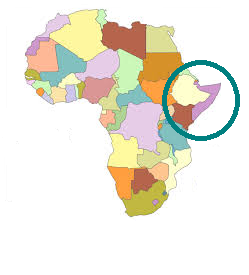
The Horn of Africa is the most eastern part of Africa that sticks out into the ocean like a rhinoceros horn. It is sometimes known as the "Somali Peninsula," touching the Red Sea, The Gulf of Aden, and the Indian Ocean. It includes the countries of Ethiopia, Eritrea, Djibouti, Somalia, and Northern Kenya.


In recent history, Somalia has had many civil wars and tribal conflicts that have caused many divides in the country, with different tribes claiming certain regions attempting to create separate countries. The most commonly known territory is the de facto state of Somaliland, in the northern part of what most people know as Somalia. It is considered  "de facto," meaning that it exists in reality, even though the country itself is not recognized by law. Somaliland declared itself independent from Somalia in the early 1990s. However, it is not yet recognized as an official country by UN standards. But it does have its own government, land borders (though disputed) and requires a separate visa to travel than Somalia. A few years later, "Puntland" also declared itself an autonomous state of Somalia. However, it is not seeking recognition as its own country. Puntland does have a president and parts of a working government but also adheres to and is still considered part of Federal Somalia.


Map: www.bbc.com.uk


 This is all a bit confusing, I know! The most important thing to remember is that Somali, Somaliland, Puntland, and the general region of the Horn of Africa is that the tribes and clans are truly the ones who control the area. All of the borders you see on typical maps are not often recognized or upheld by the local people. The clan elders and their relationships with other clans determine reign and rule in the region. What land belongs to what clan can change if there is a conflict between the clans. This brings us to our next point:

Who are Somalis?

Somalis are the people who descend from the Somali region of the Horn of Africa. There are many Somali people around the world, most of whom started out as displaced people or refugees who fled from civil conflict taking place in Somalia.

Depending on who you talk to, "Somali" is made up of the Somali words "soo" and ‘maal," meaning "go and milk," referring to their camels, goats, or cows. Though like much of Somali culture, that too is disputed! Some say "soo" and "maal" mean "from fortune," pointing out that Somalis have a lot of wealth in their herds. Either way, both definitions allude to the Somali people and their herds. They are well known for their herds of camels. They come from a background of being nomadic herders, taking their animals to where there is grass and water. Now, there are more traditional cities and villages, and the people are generally more settled and only send their herds out close to home.

The Somali tribes are made up of five prominent clans. As previously mentioned, the clans make up the central part of Somali culture and politics; the clan leaders rule and reign. Clan ties are passed down from the father.

The majority of Somalis are Muslim. Historically they have been called the "Protectors of Islam." Though they follow the teachings of Muhammad, most also put their faith in sheik's or medicine men, who make amulets, often using the verses of the Qur’an as spells for protection. This need for security is based on their fears of the evil eye or curses from others.

These deep Islamic roots bring us to What?

What exactly is the goal of moving to this region and spending so much time learning the culture and the language? Our goal is to see a disciple-making movement among the Somali people. Our biggest hope and prayer is that Somalis will give their hearts to Jesus and surrender to following Him, becoming a disciple who shares this new faith with others.

When we say disciple, we mean both the noun and verb form. We want to see devout disciples who desire to study the ways of Jesus, take on and embrace their new identity in Him and follow in His footsteps by encouraging and raising up others who also desire to follow Him.

How?

How are we going to see this movement happen? First, we pray! We cannot make any plans that will force this to occur among these people in this region- Only the Father can soften their hearts, open their minds, and give them ears to hear the True Gospel! We have, and we will continue to posture our heart toward the Father, lean on Him, listen closely for His voice, and follow His leading as we take steps toward this goal.

If you’d like to learn more details about how we are going about this, sign up for our newsletter!

Newsletter

Monday, January 24, 2022

Our Story

 Every couple has their own love story, and ours is pretty unique! Fuzzy and I had our fair share of broken hearts and failed relationships in the past, primarily due to our desire to live overseas and share Truth with the unreached. Most people don’t jump at the thought of giving up “The American Dream,” leaving family and friends in America to tough it out in remote places in Africa; oddly enough, that is precisely what drew Fuzzy and I together.

I felt confident that coming home to settle down in America wasn’t for me at this time. I was living and working in North Africa, finally realizing that after a few two-year terms on the mission field, it was time to commit my heart to be a full-time missionary. Fuzzy had come to this decision years before I did and assumed that marriage would not be in the cards for him unless he found a girl willing to do life in the Horn of Africa.

Fuzzy was in the states preparing to return to The Horn, and I was halfway through my second term in North Africa. We found ourselves on a website designed for single missionaries to meet and share each other’s callings. We exchanged a few messages on the website and found out that we both have the heart and desire to live and serve in Africa.

We decided to try a video phone call to see if we had any spark- the first call lasted for three hours! How did the African internet withstand such a long call? - To this day, I have no idea! But I know that my face hurt from smiling so much after the call!

We spent many early mornings and late nights sharing our hearts, love for Our Father, and desire to see the unreached reached connected us even though we were countries and oceans apart. After a few weeks of talking on the phone almost daily, Fuzzy wrapped up his time in the states and prepared to return to Africa on the first of the year. Not knowing if or when we would be able to meet in person, Fuzzy took a giant leap of faith and purchased an engagement ring before flying out of the country, just in case he might need it in the coming months.

Our schedules conflicted; we could not find a way to meet in person until early spring. Even then, it wasn’t without drama. In March, April, and May between the both of us, we had a few 12-hour bus rides, one spurt of house arrest, one revoked visa,  6 flights, 4 passports, 6 approved visas, many dropped phone calls, a few tears but ended with a thriving relationship and one marriage proposal! Missionary dating is not for the faint of heart! 

We thought dating across countries, continents,  and time zones was challenging, but wedding planning was much more complicated. Somehow, with the help of family and friends, we managed to pull together a beautiful woodsy wedding at the close of the summer. The few weeks leading up to our wedding was the most time Fuzzy, and I had spent together, in the same place at the same time- like I said, our love story is unique, but I’m so happy it’s ours.


The Long Awaited Blog Post

 Hi Friends! 

If you have been following Fuzzy and me for any about of time, you may have noticed a little button on our website that linked to this blog. For the last two years, I have been meaning to write blog posts, sharing stories with you about our life overseas-as you can see this is the first one to actually make it to the interweb. 

Without fail, I would sit down and write a story, a story about something that happened, a cool new cultural experience, or a lesson God was showing me.  I would read and edit it and think that I was all ready to hit PUBLISH, then be completely overcome with anxious thoughts.

No one wants to read this!
There are too many grammatical errors! 
This story/life is not as interesting as so many others out there!
I am a poor writer!

The list could go on, but I think you get the point.  I really do enjoy writing, and sharing stories. Telling stories is so much a part of who we are as people! I do hope that the stories I share here will be interesting to you and that you will be gracious to me (and all my errors) as I try to be more intentional about sharing little glimpses of our life overseas.  

Living in Community

  "Living in Community" or "doing life together" are buzzwords in the Body of Christ these days. And in theory, it sound...